
History
The History curriculum offer at our school strictly follows the National Curriculum in Key Stage 1 and Key Stage 2, and the EYFS Statutory Framework and Development Matters in the early years.
Our curriculum is highly ambitious and purposefully designed to give all learners—particularly the most disadvantaged and those with special educational needs and disabilities (SEND)—the foundational knowledge and cultural capital they need to succeed in life.
We believe in equitable endpoints; where required, adaptive pedagogy and targeted PedTech (Pedagogical Technology) are leveraged to remove barriers to learning. This ensures that disadvantaged pupils and those with SEND are on the same historical learning journey.
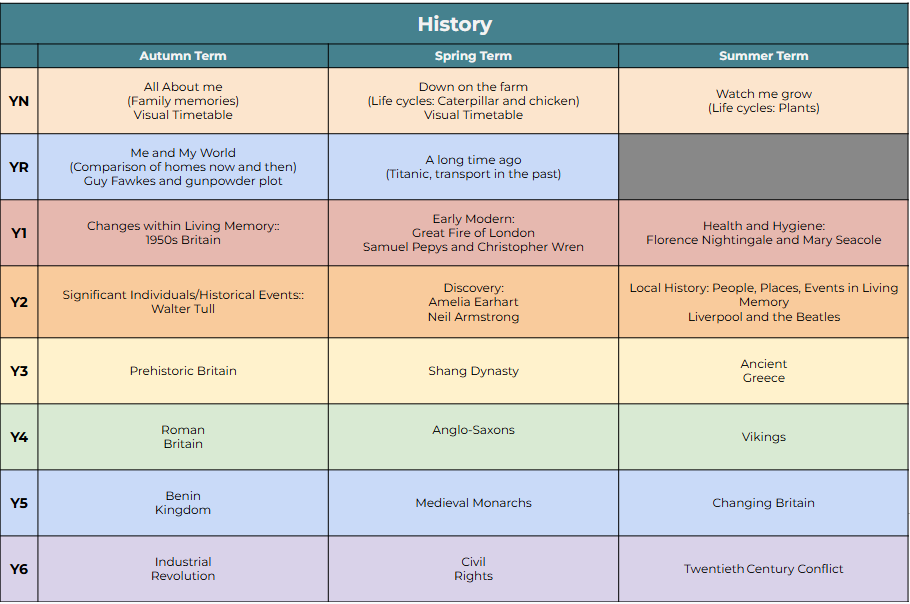
Our curriculum is carefully weighted with equal priority given to both substantive knowledge (people, dates and events) and disciplinary knowledge (how historians work and come to their conclusions). Clearly defined substantive knowledge end points are identified at the end at the end of the unit and disciplinary knowledge end points at the end of each key stage. Our curriculum is chronological & uses common threads to ensure pupils build on previous learning to develop their historical understanding. Key substantive concepts—such as 'empire', 'legacy', 'religion', and 'settlement'—are intentionally threaded and repeated throughout the curriculum, as outlined in our Concept Map.
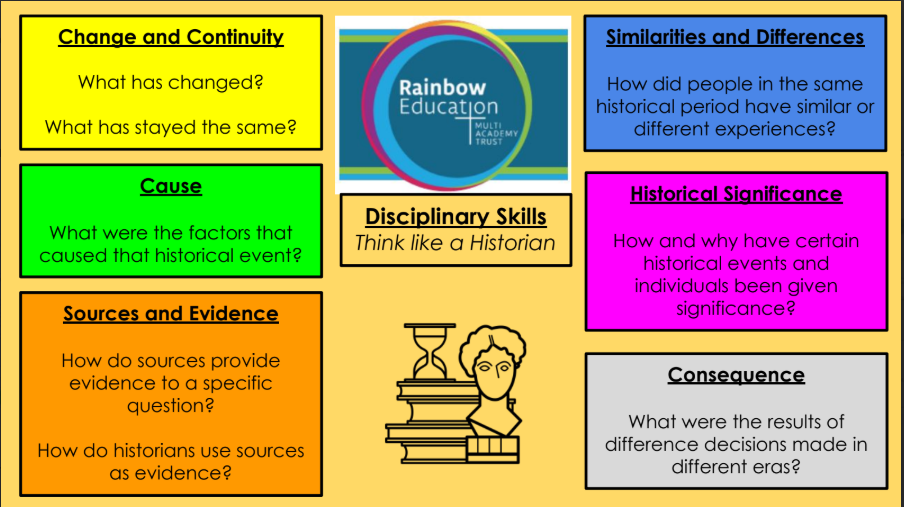
In Early Years and KS1, plans are written following the end points and key concepts. This leads into the Pearsons' curriculum which is taught in KS2. This is enhanced with a Historical Source starter and a disciplinary task so children have the opportunity to practice the key history disciplinary concepts e.g. historical significance. Please see above for our 'Think Like a Historian' poster, which is used to scaffold the children as they make judgements about the past.
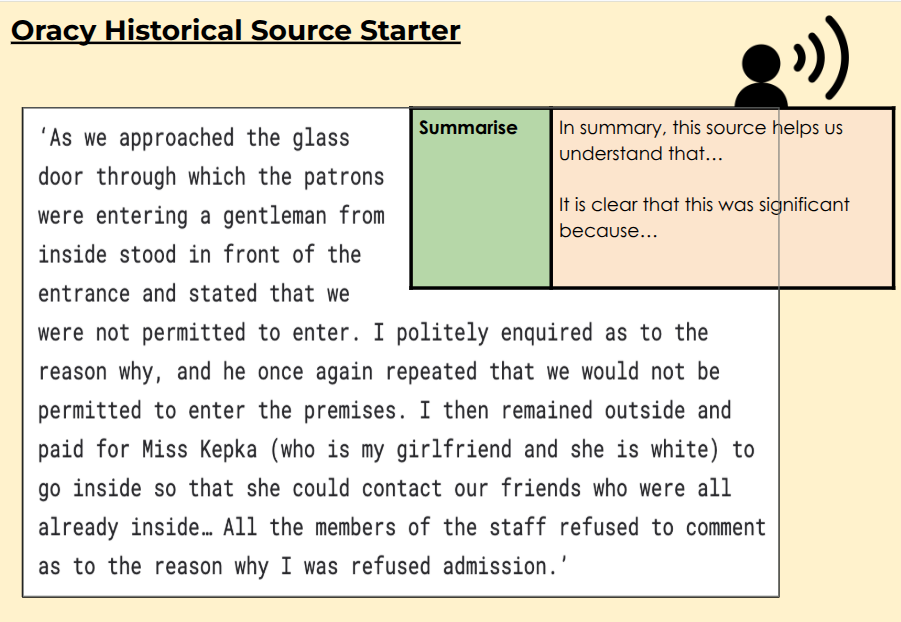
To develop confident communicators who can articulate historical arguments, Historical Oracy Starters are embedded into the beginning of every lesson.
These structured, talk-based openings encourage pupils to debate interpretations, critique sources, and use high-level tier 3 historical vocabulary from the outset. By practising structured talk, pupils build the linguistic confidence required to transition from speaking like a historian to writing like a historian.
Our pupils represent an urban area of Wirral and this is reflected through an inclusive, diverse curriculum which is supported through additional extra-curricular focuses on events such as Remembrance Day, Black History Month.